Deadly Disease that Devastated Napoleon's Army
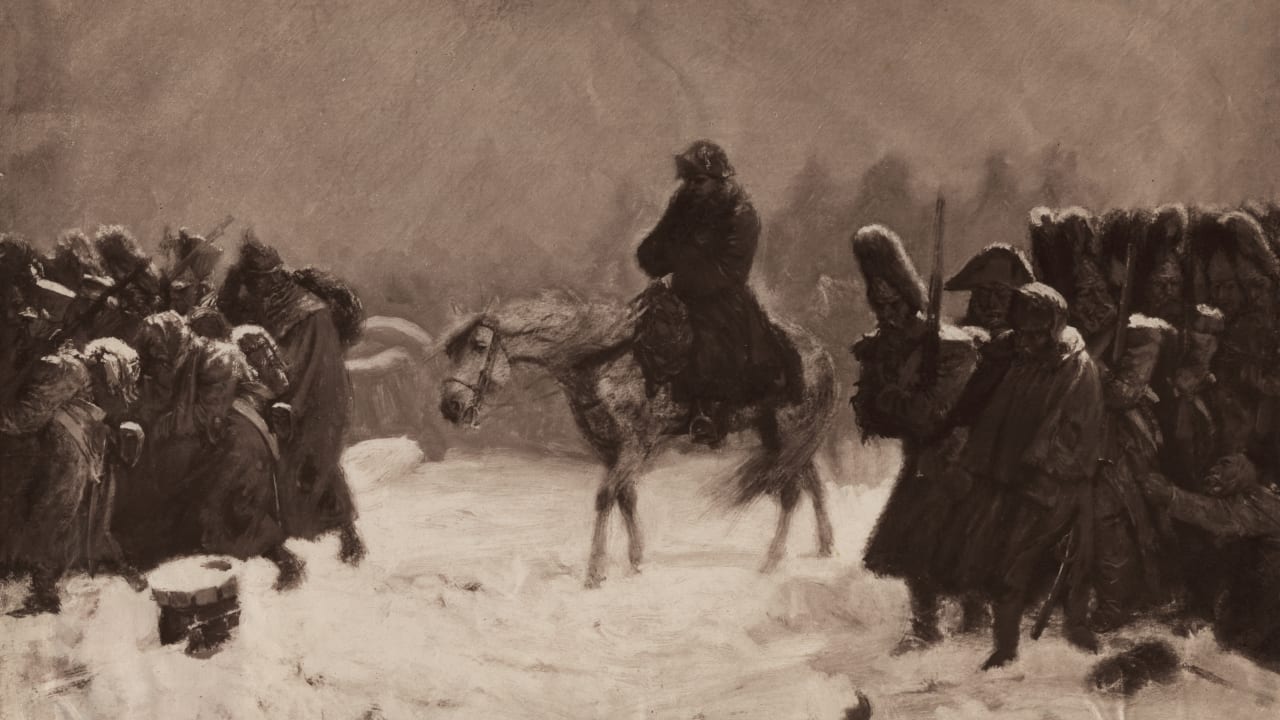 |
| French Emperor Napoleon Bonaparte and the Grande Armee flee the pursuing Russian army on the retreat from Moscow during the Napoleonic War of the Sixth Coalition on 20th November 1812 in Russia. An etching after the original work by Adolph Northen. A new study involving DNA extracted from the teeth of 13 French soldiers who were buried in a mass grave in Lithuania's capital Vilnius revealed two new pathogens that may help understand why Napoleon's army was forced to retreat from Russia in 1812. The discovery of the bacteria that cause paratyphoid fever and louse-borne relapsing fever, alongside previous work, showed that several infections had circulated among soldiers already enfeebled by cold, hunger, and exhaustion. The retreat from Russia by Napoleon Bonaparte and the French Grande Armée in 1812 was a cataclysmic event that marked the beginning of the end for his empire and personal dominance in Europe, with about 300,000 soldiers perishing in a force that originally numbered roughly half a million. The Vilnius site, discovered in 2001, contains the remains of approximately 2,000 to 3,000 soldiers from Napoleon's army. Vilnius was a key waypoint on the 1812 retreat route. Many soldiers arrived exhausted, starving, and ill. A substantial number died there and were interred rapidly in mass graves. |


Comments
Post a Comment